

Reverse osmosis produces very pure water by removing chemicals, pesticides, pharmaceuticals, and dissolved solids. It's rarely used for a whole house, but some groundwater is so contaminated that reverse osmosis is the only practical way to give the entire home clean water. A whole house reverse osmosis system takes careful planning, regular maintenance, and a clear understanding of your water's chemistry. Here's what it is, who actually needs one, what to plan for, and what it costs.
Quick answer: Most homes do not need a whole house reverse osmosis system. It's usually only necessary for private wells with severe problems, like high arsenic, nitrates, chromium, or very high TDS, that other whole house filters can't fix. A whole house RO system typically costs about $12,000 to $20,000 installed, including pretreatment, a large storage tank, a booster pump, and post-treatment. For most homes, an under-sink RO system for drinking water plus a whole house filter or water softener is the better fit.
| Under-sink RO | Whole house RO | |
|---|---|---|
| Treats | Drinking and cooking water at one faucet | Every tap, shower, and toilet in the home |
| Typical cost | About $200–$800 | About $12,000–$20,000 installed |
| Installation | DIY in 2–4 hours | Professional install recommended |
| Extra equipment | Small tank under the sink | Pretreatment, 250+ gallon tank, booster pump, pH adjuster, UV |
| Best for | Most homes on city or well water | Severely contaminated wells |
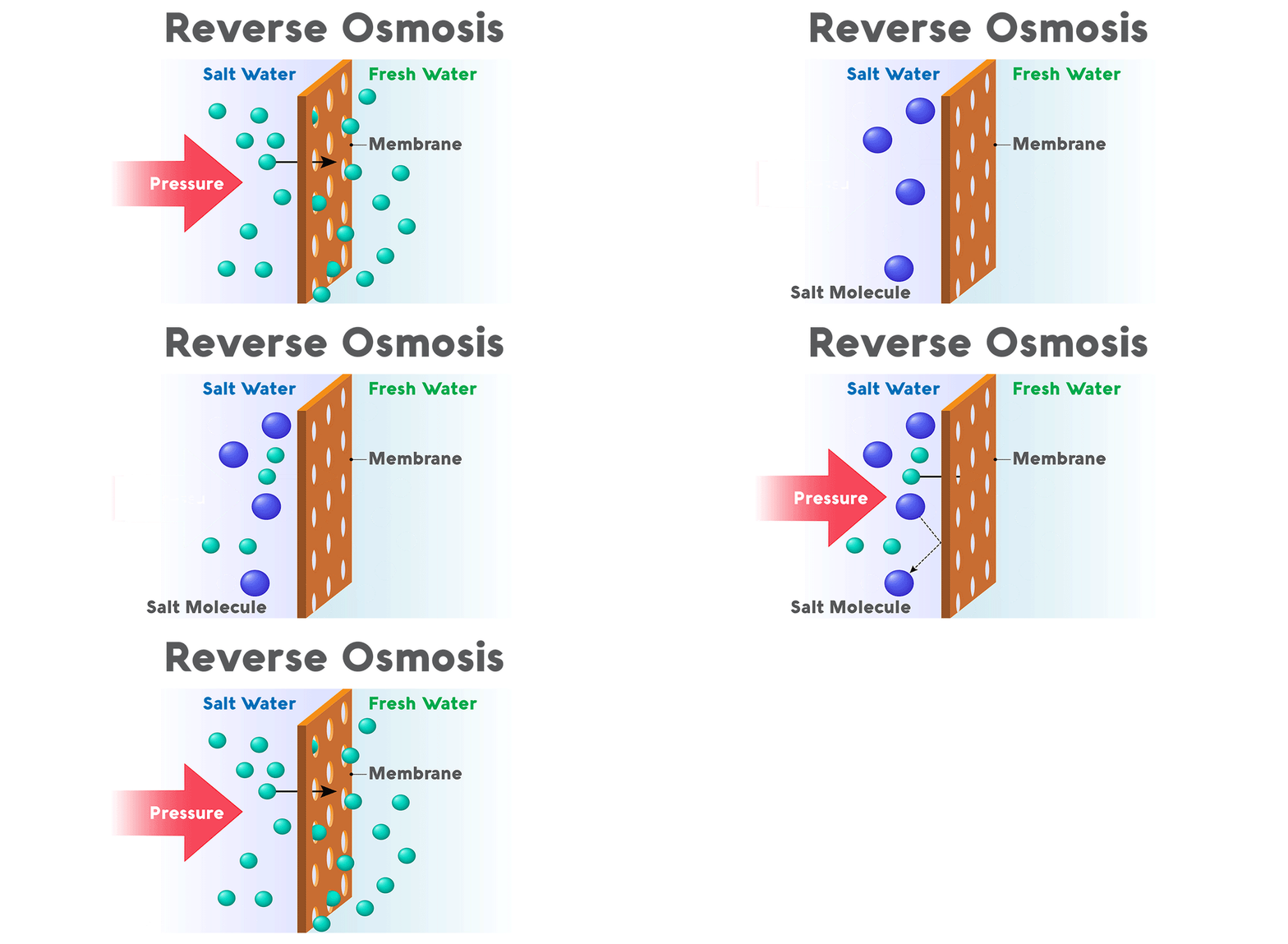
A whole house reverse osmosis system filters all of your home's water through a reverse osmosis membrane. It's installed where water enters your home, so every drop is treated, from drinking water at the kitchen sink to the water you shower with and flush your toilets with. The RO membrane can remove over 98% of dissolved organic and inorganic matter, including hardness, salts, and TDS. Reverse osmosis is also more cost-effective than other high-purity methods like deionization or distillation.
RO removes a long list of contaminants, including chromium, uranium, copper, mercury, arsenic, boron, lead, sodium, and nitrates. Many of these are health risks at high levels, and few treatment methods can remove them all at once. When a water source has toxic levels of chemicals and metals, it can make sense to remove them from every faucet in the home, not just the kitchen.
Learn more: What is reverse osmosis and how does it work?
Do I Need a Whole House Reverse Osmosis System?Probably not. A whole house RO system is only necessary for very specific water problems. It's most common in rural homes on private wells where the groundwater has several hard-to-treat contaminants at once, such as:
- High levels of naturally occurring arsenic or nitrates
- Chromium, uranium, or other heavy metals
- Very high TDS or dissolved salts
- Industrial contaminants like PFAS or VOCs near manufacturing sites
City water is disinfected and regulated, so it rarely has contaminants that only whole house RO can fix. Hardness, chlorine, chloramines, and lead in city water can usually be treated with other whole house water filtration systems or a water softener, plus an under-sink RO system for drinking water.
Some people on city water choose whole house RO to remove fluoride from every tap. Fluoride is hard to remove. The usual alternative, activated alumina, needs long contact time and only produces about 0.25 gallons per minute, which is far too slow for a whole house. That's why people who want fluoride-free water throughout the home usually turn to reverse osmosis.
Start With a Water Test
The only way to know if you need whole house reverse osmosis is a detailed lab water test. Many of the most harmful contaminants have no taste, smell, or color, and many visible problems like discoloration or metallic taste can be fixed with simpler filters. A lab test shows exactly what's in your water, what pretreatment you need, and gives you a baseline to measure your system's results.
For well water, collect a sample and send it to a state- or nationally certified lab. The lab compares your results to EPA drinking water standards and flags anything above safe levels, usually within about two weeks. Private wells aren't regulated, so plan to test yours every year. On city water, you can check your utility's annual water quality report, or search the EWG Tap Water Database by zip code.
If your test shows nitrates, arsenic, chromium, or TDS far above EPA limits, talk to a water treatment specialist about the right system.
Learn more: How to remove bacteria from well water
What to Plan for Before Installing Whole House ROAn under-sink RO system needs one plumbing connection, a faucet, and a small tank. A whole house system needs much more planning: pretreatment to protect the membrane, a system and tank sized for your household, post-treatment, space, and a plan for wastewater.
1. Pretreatment
Almost every whole house RO system needs other treatment in front of it to protect the membrane:
- Water softener: Hard water minerals scale and clog the RO membrane, cutting output and quality until it fails. Install a water softener first if you have hard water.
- Iron filter: High iron fouls the membrane. Remove it with a softener or an iron reduction filter.
- Sediment filter: Sediment filters catch sand and grit that would clog the membrane and the system's flow restrictor.
- Carbon filter: Most RO membranes can't tolerate chlorine. Carbon filters remove chlorine and organic compounds like VOCs before water reaches the membrane.
Learn more: How water softeners work | How sediment filters work
2. Sizing the System and Tank
Your system has to keep up with your household's daily water use. Each person typically uses about 60 to 75 gallons per day. A family of four would want at least a 250-gallon water storage tank, paired with an RO system that can refill it quickly, often around 1,000 gallons per day (GPD). A 1,000 GPD system makes about 41 to 42 gallons per hour, so it can refill a 250-gallon tank in a little over 6 hours.
If the system's output is too low, the tank never fills and the system runs constantly. Guests or a busy day could drain it completely. That's why whole house systems are often sized well above average daily use. Always have a water specialist help size the system and tank for your home.
Shop commercial and whole house reverse osmosis systems.
Learn more: How water storage tanks work | RO tank: how it works and what size you need
3. Post-Treatment
Water also needs treatment after it leaves the storage tank and before it enters your plumbing:
- pH adjustment: RO water is mildly acidic, usually around pH 5 to 6, which can corrode copper pipes and cause pinhole leaks. Under-sink systems use a small remineralizing cartridge, but that's too small for a whole house. Instead, use an acid neutralizing filter with calcite media to raise the pH and protect your plumbing.
- UV disinfection: Wells that need whole house RO often have bacteria too, and bacteria can grow in the membrane or storage tank. RO shouldn't be relied on for disinfection, so a UV purification system is recommended as the final stage.
Learn more: How UV purification works | How to treat acidic water
4. Space and Water Pressure
Whole house RO takes up a lot of room. You'll need space for softeners and brine tanks, a pH neutralizer tank, the RO system, and a storage tank that can be six feet tall or more. Everything must be indoors where it won't freeze, near your main water line, with a drain for the RO and softener wastewater, and with enough room to change filters and service equipment.
Because water comes out of an unpressurized storage tank, you'll also need a water booster pump, such as a Grundfos pump, to pressurize water for showers, toilets, and upstairs bathrooms. It's installed after the RO system and post-treatment, before water enters your home.
Learn more: How water booster pumps work
5. Wastewater
All reverse osmosis systems send some water to the drain to carry contaminants away. Larger commercial systems are more efficient than under-sink units, but they also treat much more water. For example, a 1,000 GPD system running at 1:1 efficiency would use 500 gallons of water to fill a 250-gallon tank. Less efficient systems can send thousands of gallons down the drain each day, and your water chemistry affects efficiency too. In areas facing water shortages, that's an important factor to consider.
How Much Does a Whole House Reverse Osmosis System Cost?A whole house reverse osmosis system typically costs about $12,000 to $20,000 installed. The commercial-grade RO unit itself is often around $3,000 to $5,000. Pretreatment, the storage tank, booster pump, post-treatment, and professional installation make up the rest. Larger, higher-output systems cost more.
Plan for ongoing costs too:
- RO prefilters and membranes: regular replacements. Shop RO replacement filters.
- Sediment and carbon filters: about every 6 months
- Water softener: salt refills and occasional resin replacement
- UV system: new UV lamp every year and quartz sleeve about every two years
- pH neutralizer: calcite media refills as it dissolves
You can install the system yourself, but whole house RO is complex. A professional plumber or water treatment expert can make sure every component is installed correctly, so you don't lose water pressure or performance.
Whole House Reverse Osmosis FAQsIs a whole house reverse osmosis system worth it?
For most homes, no. Whole house RO is expensive, wastes water, and needs pretreatment, post-treatment, and a booster pump. It's worth it mainly for private wells with severe contamination, like high arsenic, nitrates, chromium, or TDS, that other whole house filters can't remove. Most homes are better served by under-sink RO.
How much does a whole house RO system cost?
A whole house reverse osmosis system typically costs about $12,000 to $20,000 installed. The RO unit is often $3,000 to $5,000, and pretreatment, a large storage tank, a booster pump, UV, pH correction, and installation add the rest. Ongoing filter, membrane, salt, and UV lamp costs add more each year.
What size whole house RO system do I need?
Plan on about 60 to 75 gallons per person per day. A family of four typically needs at least a 250-gallon storage tank and an RO system that makes around 1,000 gallons per day, so the tank refills quickly. Always have a water treatment specialist size the system and tank for your home.
Does whole house reverse osmosis remove fluoride?
Yes. Reverse osmosis is the most practical way to remove fluoride from all the water in a home. The main alternative, activated alumina, filters too slowly for whole house use. If you only want fluoride-free drinking water, an under-sink RO system is a much less expensive option, typically removing about 85 to 95%.
What are the alternatives to whole house reverse osmosis?
Most homes combine an under-sink RO system for drinking water with whole house treatment for everything else. Common pairings include a water softener for hardness, a carbon filter for chlorine and chloramines, an iron filter for well water, and UV disinfection for bacteria. A lab water test shows which combination you need.
If you have questions about whether whole house reverse osmosis is right for your home, please do not hesitate to contact our water treatment experts.
You may also like:


Comments
We have fluoride in our water the maximum safety is 1.5 from and ours is 2.5. Is an under sink one sufficient or do I need a whole house system? My children are bathing in this water and it concerns me about the long term exposure effects.
Thanks.
Yes. Both reactive silica and colloidal silica can be removed by the reverse osmosis membrane. RO can usually reject around 90-98% of silica from the water. Reverse osmosis is generally recommended when the reactive silica is around or below 20ppm (usually found in surface waters or shallow wells). If you have higher levels of silica, like 50+ppm, reverse osmosis is a less effective filtration method, as the silica can foul the RO membrane.
question, can you tell me if Silica (reactive form) can be removed by RO?